


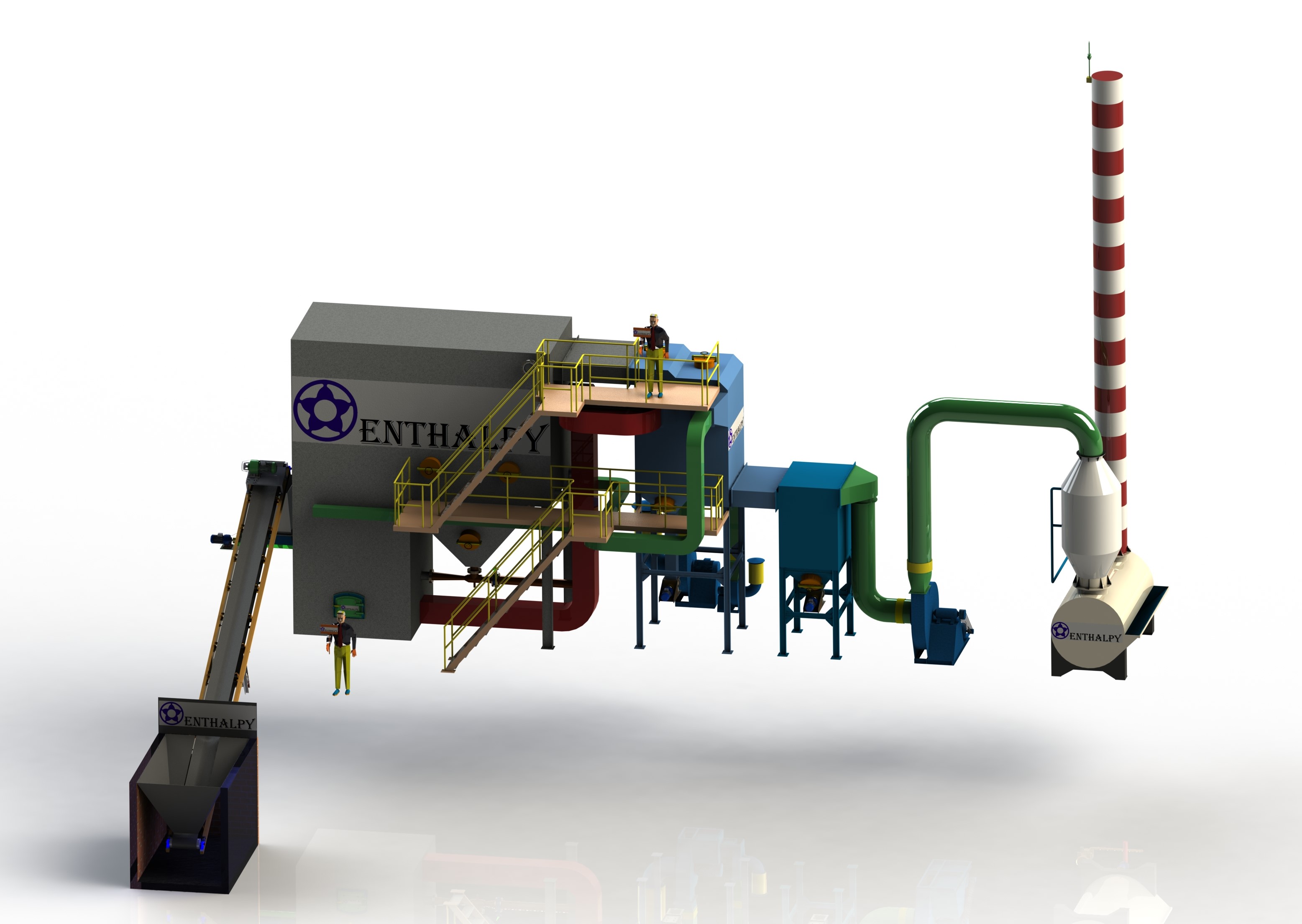

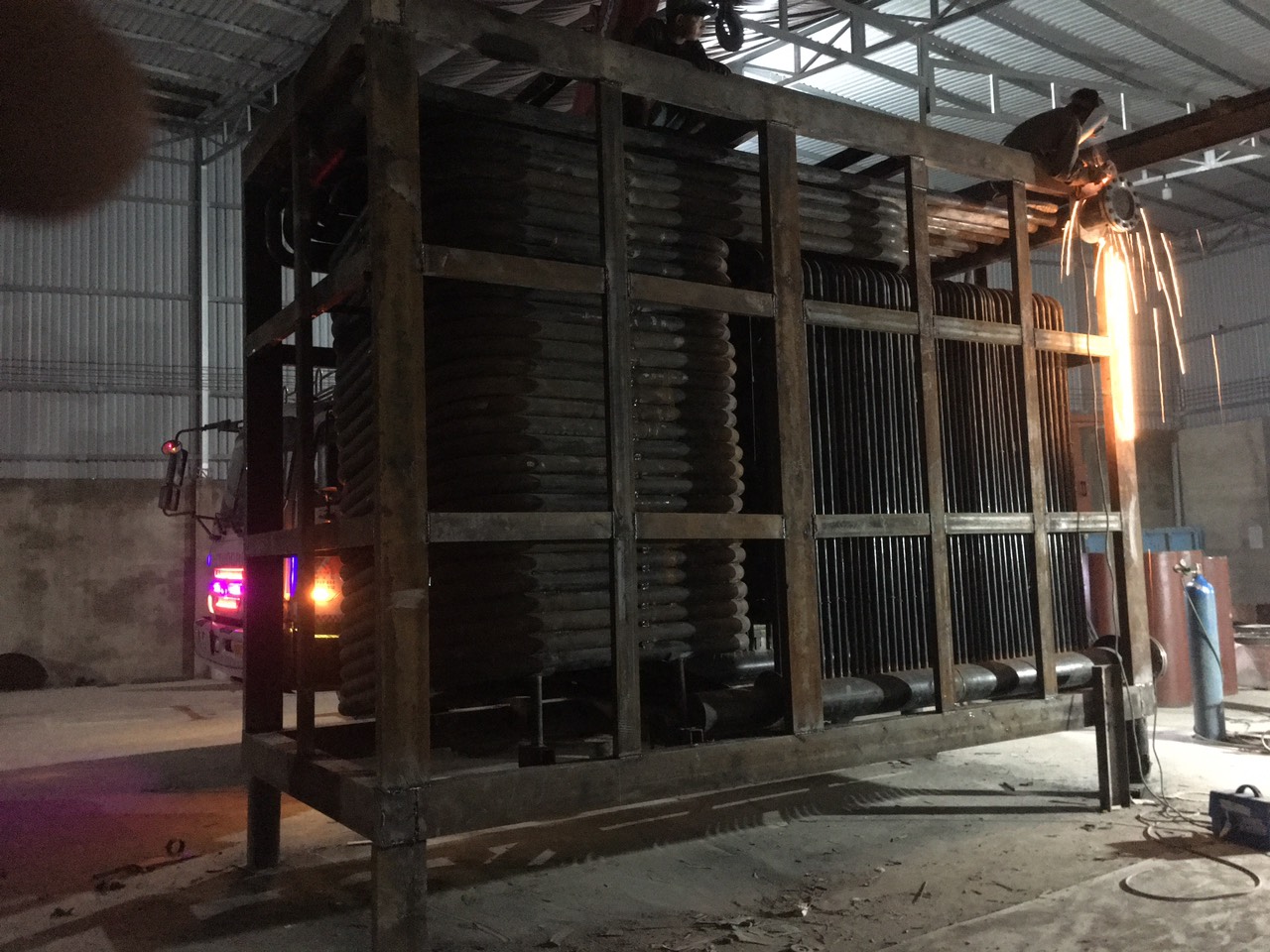
Enthalpy has many years of experience in the design, manufacture, installation and operation of thermal oil heaters. All the thermal oil systems we have designed, manufactured and installed are precise, safe and well suited to conditions in Vietnam, with heat outputs from 1,000,000 kcal/h to 10,000,000 kcal/h.
The main features of Enthalpy thermal oil heaters are as follows:
Thermal Oil System Components:
A thermal oil system consists of a thermal oil heater, heat exchangers (heat consumers), an expansion and deaeration tank, circulation piping and a pumping system. The expansion tank can be blanketed with an inert gas such as nitrogen to prevent oxidation of the thermal fluid, although in many cases it is vented to the atmosphere.
-
Circulating fluidized bed thermal oil heater:
- The Enthalpy thermal oil heater is of horizontal design. The heater size is determined by the process heat demand, the operating temperature and the required flow rate.
- The heater body of the Enthalpy thermal oil heater combines radiant coil tubes and helical convection coils in an optimized arrangement to maximize heat absorption from fuel combustion.
- The fluidized bed furnace burns the fuel completely. In particular, the firing rate can be increased or decreased very quickly, much more easily than in chain grate or fixed grate heaters. This allows fast and flexible load changes, preventing overheating of the thermal oil due to thermal inertia in control, or an excessive drop in oil temperature when demand rises suddenly. Fuel metering and feeding are fully automated.
- Enthalpy thermal oil heaters are equipped with an air preheater that recovers heat from the flue gas to increase efficiency.
-
Heat exchangers:
- Enthalpy designs many types of heat exchangers, including typical plate heat exchangers, etc. Customers can choose the type of heat exchanger according to their heat-using process. Enthalpy heat exchangers are optimized for maximum heat transfer and system efficiency.
-
Expansion and deaeration tank:
The Enthalpy expansion and deaeration tank is a 2-in-1 unit that performs two different functions:
- The expansion and deaeration tank accommodates the increase in thermal oil volume during heating.
- The expansion and deaeration tank also removes air and gases from the system, ensuring accurate instrument readings, preventing pump cavitation and maintaining continuous oil flow. This keeps the film temperature at the heating surfaces low, preventing oil overheating and oxidation and extending the service life of the thermal oil.
- A special feature of the Enthalpy expansion and deaeration tank is that, in addition to its expansion and deaeration functions, it prevents the hot oil circulating in the system from heating the oil in the expansion tank (cold oil seal), minimizing heat loss.
-
Piping system:
- The thermal oil piping is made of ASTM-standard heat-resistant seamless steel pipe, with fittings suitable for hot thermal oil service, such as expansion joints, valves, and heat- and oil-resistant gaskets, etc.
- Pipe diameters are sized for the appropriate oil velocity, ensuring the required oil flow rate with the most economical pipeline pressure drop.
- The piping is thermally insulated to prevent heat loss, ensure occupational safety and hygiene, and comply with fire protection standards.
-
Thermal oil pumps
- The thermal oil pump is a key component of any thermal oil system.
- Thermal oil pumps are single-stage pumps with air- or water-cooled seals and bearings, with the motor shaft connected to the pump shaft through a flexible coupling. Enthalpy selects the most suitable pump type for each customer based on the operating temperature, the cold start-up temperature and the properties of the thermal oil.
Advantages of Enthalpy Thermal Oil Systems:
- Thermal oil systems provide an efficient heat source for processes requiring temperatures of up to 400 oC.
- Operating costs are usually lower than steam systems, and maintenance requirements are usually less.
- Thermal oil systems have higher thermal efficiency and do not lose heat to the atmosphere through steam traps and leaks as in steam systems.
- Another important factor in reducing costs is the very simple design and operation of the thermal oil heater.
- Thermal oil systems are safer than steam systems because they operate at low pressure (only the pump pressure needed to overcome the circulation resistance of the thermal oil in the system).
For more information or to equip your plant with a thermal oil system, please contact Enthalpy for free consultation and the most suitable product at the best investment cost.
1. Heater type: Circulating fluidized bed fired thermal oil heater, horizontal type with helical coil and convection section.
2. Fuel: Vietnamese coal fines, Indonesian coal, and granular biomass such as sawdust, wood chips, pellets, rice husk, etc.
3. Fuel size: 0 - 20 mm for coal fines.
4. Power supply: 3-phase, 380 V, 50 Hz
5. Operating mode: Selectable automatic or manual mode for fuel feeding, air supply and ash removal.
6. Manufacturing standards: TCVN 7704:2007; TCVN 6413:1998; TCVN 8366:2010; or ASME standards, etc.
7. Environmental standards: Noise level below 85 dB at 1 m from the heater house; flue gas emissions in compliance with QCVN 19:2009/BTNMT (Vietnamese National Technical Regulation on Industrial Emissions of Dust and Inorganic Substances).
8. Main technical specifications: